Misc.

Misc.

Welcome to my Miscellaneous Projects page. This page will be for miscellaneous random projects that I didn’t want to put in the other main pages. Like a lot of the projects on this site they mainly revolve around 3D printing and most will probably be quick useful tool like projects but there may be some larger projects too as the page grows.


Harbor Freight Avanti Paint Sprayer Cup Lid

Harbor Freight Avanti Paint Sprayer Cup Lid

October 23, 2025

Harbor Freight Avanti Paint Sprayer Cup Lid

STL’s for this project are available for purchase from Cults3d.com

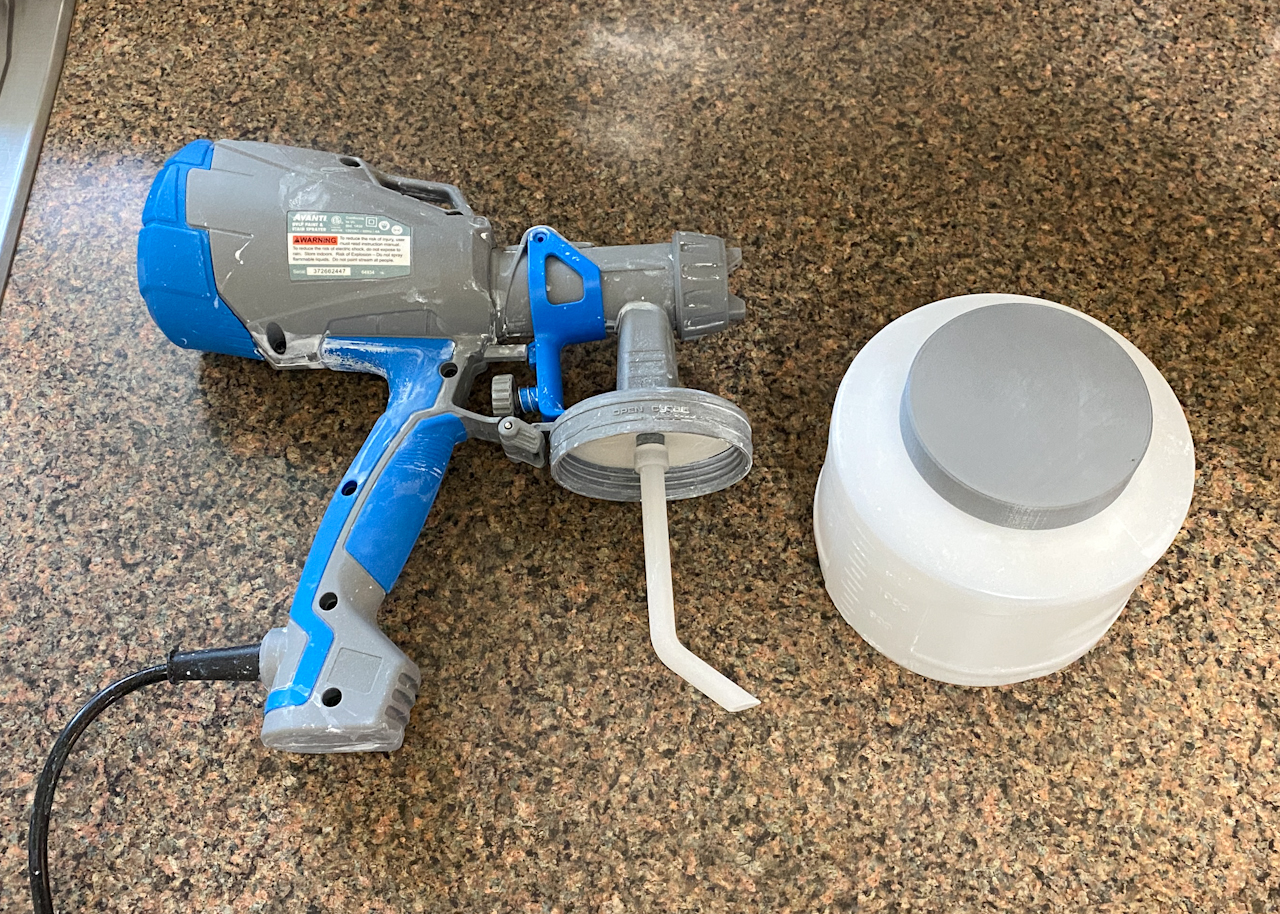
This was just a quick project to make a lid for the cheap Avanti Paint Sprayer that Harbor Freight sells to make it easier to use and clean.

These cheap AV-100 Avanti Paint Sprayers can be bought for around $40 (on sale) from Harbor Freight and while they work great for simple spray jobs they only come with one cup and no lid. I found out spraying thin coats on some interior doors that if you wait to long in between coats the paint will dry and clog the nozzle.  I figured with the help of a little 3D printing I could make a lid for the cup so I can remove the cup and clean the sprayer in between coats.

The Lid design was pretty basic and easy to print and fits the cup well enough.

The threads are the only tricky part of the design but still very easy to copy from the sprayer itself.  Now while Harbor Freight doesn’t sell any kind of lid they do sell extra cups but not in store. I didn’t feel like waiting to order an extra cup so while I was at it I also designed an adapter that fits the sprayer that allows me to use a different container to spray water thought the spray to clean it out while the first paint coat dries.

I ended up just using a 40 oz Skippy Peanut Butter container that I had laying around.

The adapter screws right onto the peanut butter jar and then it can attach to the sprayer for cleaning.

The only downsides are the peanut butter jar is much taller so the pickup suction tube doesn’t go all the way to the bottom and you can not stand up the Sprayer and let it sit on your bench like you can with the original cup.  Those issues don’t bother me because I’m only spraying water through it to clean and then taking it right back off to clean the rest of the sprayer.  (I would not try to spray paint or stain through this container or it might make a mess as it’s probably not a perfect air tight seal with the 3D printed adapter.)  Overall the parts worked great for me and I even left stain in the cup with the lid on for a week and everything was fine to continue painting the next weekend.


All Information, Pictures, and Material is copyright © 2025 by Stephen Thone and may not be used for any personal or commercial purposes without the consent of the author. All rights reserved. The Author makes no guarantees or warranties as to the accuracy or completeness of, or results to be obtained from accessing and using the Information herein.+

Chipmunk Trap Extensions

Chipmunk Trap Extensions

August 28, 2025

Chipmunk Trap Extensions

This was a quick project to make some extensions for a Chipmunk trap.

I had a problem this year with Chipmunks digging holes all over my yard so to try and get rid of them I first tried some gas bombs. I stuck a lit bomb in the hole and used a leaf blower to inject it into their whole tunnel system…

…well I didn’t seal off the hole enough because the little bastard shot out of the hole and kicked off my leg in the process.

I then decided to buy a cheap Chipmuck live trap from Amazon to try and trap/relocate them. The only downside (from reading the reviews) is you can catch squirrels in these traps and I didn’t want to deal with them also.

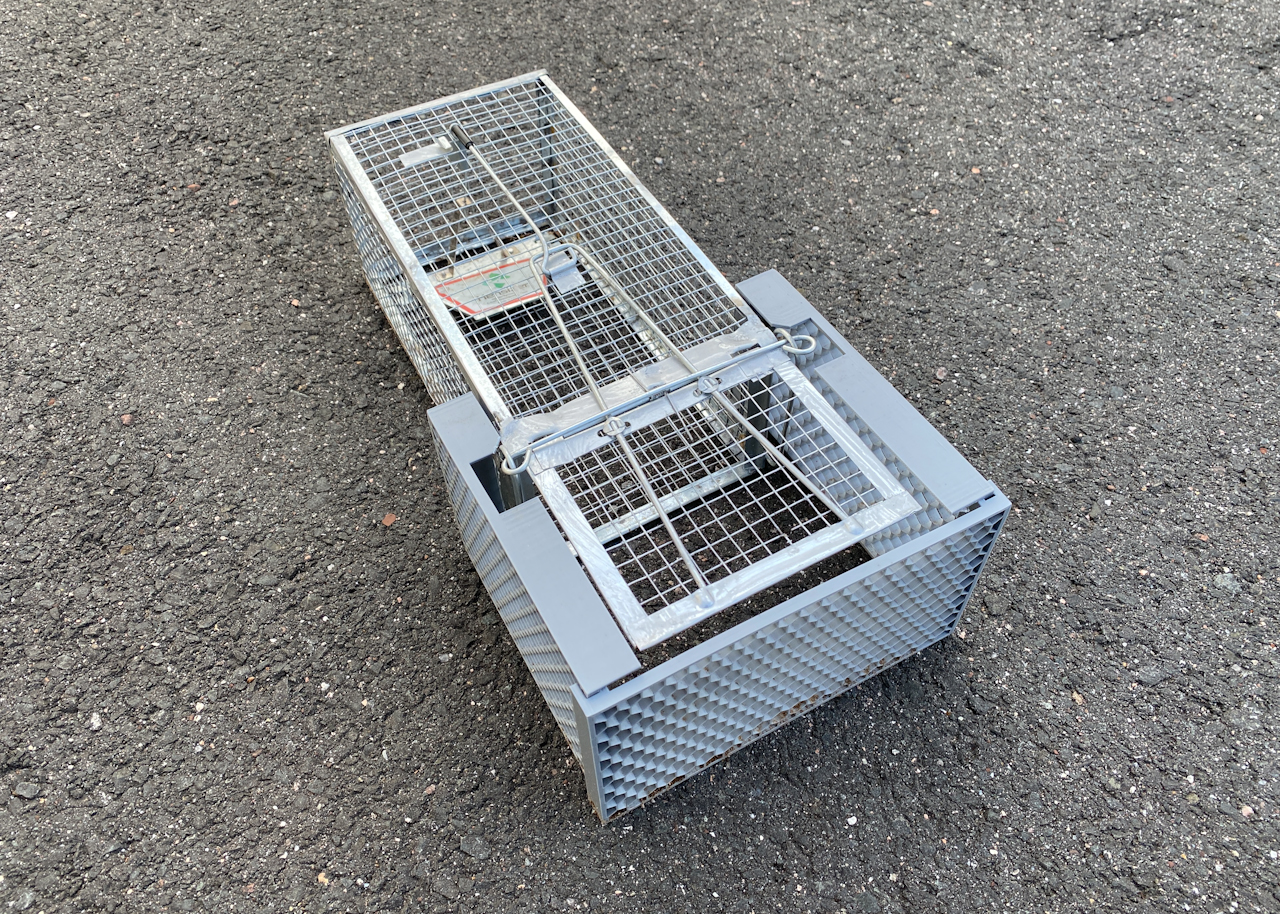
I figured if I could make some extensions to this trap I could just place it over the holes without using bait and they would just catch themselfs while exiting their holes.  After a quick few measurements I jumped into CAD and designed up one side piece and a front.

While these parts are designed as solid pieces you can just use a few different processes in the slicer to print with no top or bottom layers and minimal infill to create an actual cage like finished piece.  (I only needed to design one side piece then then just mirror it while printing for the other side.)

Here are the finished printed pieces.

There are tabs on the side pieces that just lock onto the wire of the actual trap…

… and the front piece just sides into the grooves on the sides.

Here the extensions are connected to the trap. While it is possible for something small (like a mouse) to climb out of the cut out areas I doubt they will head for that point first.

Those cut outs are needed so the locking bar can slide into place to lock the trap when triggered.

Now once I find a new hole (the last chipmunk never came back after the gassing)…

… I just place the trap over the hole and wait.

Success! … wait that’s not a chipmunk!

I ended up catching a short tail Shrew… I never even heard of these things before.

While I’m waiting for new holes to appear the extensions can be dissembled and stored inside the trap.


All Information, Pictures, and Material is copyright © 2025 by Stephen Thone and may not be used for any personal or commercial purposes without the consent of the author. All rights reserved. The Author makes no guarantees or warranties as to the accuracy or completeness of, or results to be obtained from accessing and using the Information herein.+

Mouse Trap Hood

Mouse Trap Hood

July 14, 2025

Mouse Trap Hood

STL’s for this Hood are available for purchase from Cults3d.com

This a hood for a snap style mouse trap to keep the mice from just eating the bait without setting off the trap.

This hood was designed around the Topcat brand of snap traps but it will also fit Victor traps.

The hood design is pretty basic…

The Hood blocks the bait from every side but the rear of the trap.

The sloped design of the hood (toward the bait cup) also forces the mouse to press the trigger while trying reach the bait. There is no way to reach the bait without pressing down on the trigger now. Before they could sit off to the side and just lick the bait cup and holes clean without triggering the trap. The hood also makes sure the mouse’s head is in the correct position for a greater chance at a fast clean kill. There’s nothing worse than not finding the trap were you left it because the mouse was not dispatched quickly and allowed to drag the trap away. (although this is not a full proof solution to that problem and that can still happen.)

The hood just snaps firmly onto the traps base and the tabs on the bottom of the hood just align flush with the trigger side of the base…

…this should ensure that the hammer rotates freely without hitting the hood and that the hold down catch bar tip clears the hood opening.

In my initial test it was well proven to work great.  I baited two traps side by side… the Victor without a hood was licked clean and the Tomcat with the hood did its job. (Whether it was the same mouse… who knows.)  Another bonus is I don’t even have to re-bait the Tomcat trap, just clear it and reset it as the bait cup is still full of peanut butter.

The mice do not go to waste, they are left out in my backyard and the local possum feast on them at night…. that is if the crows don’t take them first.

Here it is mounted to a Victor Trap.  (Again you just have to make sure the trigger moves freely and that the catch bar tip clears the hood when tripped.)


All Information, Pictures, and Material is copyright © 2025 by Stephen Thone and may not be used for any personal or commercial purposes without the consent of the author. All rights reserved. The Author makes no guarantees or warranties as to the accuracy or completeness of, or results to be obtained from accessing and using the Information herein.+

Hidden Bookcase Door

Hidden Bookcase Door

June 1, 2025

Hidden Bookcase Murphy Door

This is a project I’ve been wanting to make for at least 35+ years. As a kid I’ve always been fascinated with the mystery of hidden doorways and passages like you see in TV and movies. (I did grow up watching Scooby Doo on Saturday mornings 🙂 .) After all these years I’m finally in the position where I can try to make a hidden bookcase door myself… commonly called a Murphy door.

This project actually started as some water damage/mold from a tree branch piecing the roof above a seldom used closet off the master bedroom.

I ended up gutting half the ceiling and back wall to make sure I removed all of the water damage/mold which basically turned into the full closet remodel shown above. (don’t be envious of my shoe rack ladies)

The closet had a 28″ wide door but it’s a 2×6 framed wall so the back side wasn’t trimmed out very well and needed to be redone anyway so this is when I decided to try and make a bookcase door.

While remodeling the entire master bedroom I finally remove the closet door casing and I discovered the roughed framing for the doorway was not exactly done correctly.

There were no king studs and the jack studs were pieced together…

… and the header was also a mess.

While redoing the framing for the doorway correctly I also opened in up to a 34″ wide rough opening.

With the rough opening re-framed in I jumped into CAD to figure out how I wanted the bookcase to look. I didn’t want anything to elaborate so I went with this simple design. Plus it should be easy to make this way. (Famous last words…)

CAD also allows me to get a feel for how everything should go together and work in the closet.

With the original 30″ rough opening I bought some offset hinges to use so when the new bookcase door was opened it would swing back allowing for a wider opening into the closet. These probably are not needed now that I went with a 34″ opening but I’m going to still use them because I already bought them. (of course that may lead to issues later on but only time will tell.)

In this CAD model you can see how the offset hinges allow the door to swing back and in by 2 inches. Next it was onto making the actual bookcase. I will be using a single 4′ x 8′ sheet of 3/4″ birch plywood for the bookcase and casing. I’ll skip the boring part of cutting that all up though.

After cutting out the casing pieces I cobbled together a quick jig to router out the mortises for the hinges. (Did I mention I’m not much of a wood worker?… Fake it until you make it.)

Not to bad for that sloppy jig and a 35+ year old router with dull bits.

Like a glove….

Here is the new casings installed and painted.

For the molding on the inside of the closet I just used some cut down 3/4 pine strips… basically lattice strips at this point.  (don’t look at my sloppy trim work… “Caulk and paint make me the finisher I ain’t.”

I made this quick little 3D printed drill guide to get perfectly centered pilot holes for the hinges.

It basically self centers in the chamfer to align the drill bit.

Worked like a charm.

While my new casing were straight and level the original wall was not so I had to cut some reliefs in the new molding so the top two hinges stayed aligned.

I used a laser level to make sure all four hinges were in perfect alignment.

I also added one additional screw in the back side of the hinge to hopefully keep the them from bending. (did I mention these are like 2 1/2″ screws.)

Now a person who knows what they are doing would probably just build the bookcase then hang it on the hinges but I’m not one of those people so I’m just winging it as I go… so I added some double sided tape to the hinges…

…I then stuck the first side of the bookcase to the tape on the hinges while using a 3/4″ block to offset it from the casings face.

This allowed me to test the swing of the hinges…

…as well as figuring out the actual width of my shelf while still clearing the other side of the casing. (even though I designed everything in CAD I really wanted to make sure my clearances were correct.)

Here are all of the cut pieces for the bookcase. (I did change one thing, I doubled up one side of the bookcase sides to allow for longer screws for the hinges.) With the change I did have to use a different piece of scrap wood for one shelf)

Next it was time to measure and mark the location of each of the shelf’s.

I used another 3D printed jig to drill pilot holes for each shelf.

This should make assembly very easy.

I also counter sunk those holes.

I used the same jig on all of the shelf pieces too.  (This thing should go together like a piece of IKEA furniture.)

Here are all of the shelf pieces drilled and labeled.

I started by applying glue to the doubled up side pieces…

I used a few finish nails as alignment pins while screwing everything together.

I use 2 spaces (one on each side) to make sure the shelf’s where straight and evenly spaced while screwing them in place.

At this point all of the shelf’s are glued and screwed in place and I use the spacers to keep everything square while the wood glue dried.

After that I filled in all of the screw locations with wood putty.

Next I used the router to cut a groove in the face of the shelf’s on the hinge side.

This little groove will be to run wires for LED strips to light each shelf later on.

Now it was time to install the hinges using 1.25″ wood screws.

The first test fit.

Right now I have about a 9/16″ space as the door swings open.

There is plenty of room to enter the closet with the door open too.  (the offset hinges were probably not needed but I really like them anyway)

A quick check with the pine block shows the door is off just a bit (it should be flush)  it’s a little twisted at the top but this will work out OK when it comes to the door latch later on.

While the door is square I did shimmed up the bottom just a bit to keep it square while I continue to work.

Next it was onto the pine face boards.

Once again a little double sided tape helped keep things in place while I figured out height and width of the face boards.

At this point I also marked each shelf location in relation to the face boards.

The horizontal shelf face board were all cut together so the all were exactly the same.

I will be using pocket screws to assemble the face.

I used a clamp to keep everything flush while gluing and screwing them together.

The face boards are aligned about an 1/8″ above the shelf position. I’m thinking this lip will keep anything from sliding off the shelf in the door is flung open to hard or fast.

One side down… (excuse the mess… the hobby/shop room is next on the remodel list)

So far everything is looking good.

Another test fit so I can figure out the gap to the floor for the bottom piece.

That 9/16″ gap has definitely shrunk to about 1/16″ with the added face boards.

The bottom is on and I also added some temporary bracing to keep things square while it’s on to painting.

I added a coat of primer with one of those cheap harbor freight paint sprayers. While it worked well it was hard to get into all of the shelf areas without getting the nozzle too close.

Here is the painted bookcase. I ended up painting it with semi gloss rattle cans as I was afraid of screwing it up with the HF sprayer. (I need to practice more first with it.)

Next it was time to add the LED strips to the shelf’s. I started out cutting them all to length and then tinning the connection points.

The LED are stuck on to the under side of each shelf and are hidden behind the face board.

I pre-cut lengths of wire and solder each of the ends together as I went for each shelf light.

The wires are then soldered to each LED strip and then continue down to the next shelf thought the groove I previously routed in the shelf’s.

On the very bottom shelf is the original plug that came with the LED strip.

I 3D printed some wire covers to go alone the edges. Even thought the wires are hidden behind the side face board this just cleaned it up that much more.

I quick test to ensure every thing is wired and working.

Next it’s onto the backing. I’m using 1/4″ plywood for this. It’s not the best wood as I had to get it from one of the big box stores but it will have to do as my specialty wood shop didn’t have any 1/4″ birch plywood in stock.

I thought it would be easier to paint before installing the backer but I also though it would be best to tape off where it would glue to the bookcase for best adhesion as this piece would keep everything square in the long run. (I know I do a lot of stuff backwards… did I ever mention I had painting stuff.)

  Here it is after paint and it is ready to be installed

I didn’t take any picture of the install but the backing was glued and nailed to the bookcase. I am left with this small area on the bottom back side of the bookcase… and what does a secret door need but a secret drawer.

I found these 3D printed drawer sliders online and modified them to fit my tiny area.

This is how they mount under the bottom shelf.

I didn’t take any pictures of the actual build but this is the finished drawer it was lined with felt to keep the valuables safe and sound. Overall it’s pretty small at only 26″ W x 5.75″ D x 2.25″ H so I don’t know what I’ll put in there but I just wanted to use up the space.

This is the finished drawer when installed.

Here is the bookshelf installed. It was quite the task trying to put this in solo, I think the finished weight was right around 53 pounds.

And of course all lit up. These are dimmable but shown at full power in this picture. Now I need to do the trim but I need to add a latch first.

I bought one of these 6″ chain bolt latches that I thought would be perfect but the spring in them is crazy stiff so I decided to return it and just make my own.

I started with the door latch from the original door.

I started by gutting most of the internal bits of the latch and hacking off the unnecessary end with a Dremal.

I then sketched up an adapter plate on a piece of aluminum.

A little hacksawing and filing and it interfaces with the latch pretty well I think.

I sandwiched it with another plate and some 4-40 screws.

Then is was back into CAD to design up a mount to fit the latch.

A few hours later and the mount was 3D printed.

It’s all coming together…

I found this commercial striker plate that I can modify to work with my DIY latch.

Here is the modified striker plate mounted to the top of the door casing.

My DIY latch them mounts to the side of the bookcase door.

It would have been easier to put it on the back but I was afraid if something ever happened to the latch I would have no way to open the door. At least with it on the side if the the worse case scenario happened I could always rip off the front molding to get to it. It is a tight fit so hopefully the door doesn’t sag to much. Next it was onto the release handle…

I picked up a couple of random books from goodwill that fit the shelf and one of these will be used as a lever to activate the latch.

For the release lever part a started by welding a steel rod to a piece of flat stock.

I then trimmed out most of the pages of the book using a bandsaw. I wanted to leave the top section real pages… I’ve seen other setups where they use a piece of wood painted like the edges of the pages but I wanted mine to still look like an actual real book.

I glued all of the remaining pages together by spreading superglue on the cut edge inside the book.

After that a also glued in a piece of scrap plywood.

I notched out the left bottom side cover of the book to make room for the rod.  I also cut slots in the flat stock, these will allow the book to move up along the flat rod when it is pivoted on the shelf. I’ve seen other people just round off the bottom edge of the book but my method should look and work better.

A another piece of 1/4″ scrap plywood was glued on top of the 3/4″ ply so the cover sits flush when closed. I also added a few magnets to keep it closed but still accessible if I ever need to do maintenance.

The lever rod was then loosely screwed in place allowing it to move freely.

Next I took some measurements and transferred them to a piece of paper so I could mark where to drill the hole in the side of the bookcase for the rod.

The hole needs to be drilled from the other side because there is no room for the drill along the shelf so I just took a nail and forced it through the side to mark the location on the outside.

Before drilling I did clamp a piece of scrap on the inside to minimize tear out while drilling.

I first drilled a 1/2″ hole about 5/8″ deep and then completely through with a 5/16″ bit that matched the rod.

This aluminum bushing a turned up will be inserted from the outside and fit into the 1/2 hole to better support the rod. It’s a little overkill but it will also look a lot nicer too once installed.

Next I put the spacer book in place and using a pencil through the hole marked where it needs to be notched out for the rod.

The bandsaw made quick work of making the notch, although it did make a mess.

I cleaned up the notch a bit with a file but didn’t spend to much time on it as no one will ever see it once in place.

The lever book is then installed…

… and the spacer book then covers the rod.

Here is the bushing installed for a finished clean look.

A quick test of the lever and then it’s on to figure out how to connect it to the actual latch.

To make an actuator lever I started by drilling a hole in the side of the nut to fit a 1/8″ steel rod and then drilled out the threads using a 5/16″ bit to match the release lever rod.

Then with some more sloppy welding I attached that nut to some more flat stock and cut out actuator lever shape.

The actuator lever is then slide onto the release lever rod so I could measure and then cut it down to size.

I also drilled a series of holes in the actuator lever.

The release rod was then drilled out to accept the 1/8″ pin which will secure the actuator lever to the rod.


I will be using a steel wire to couple the actuator lever to the release latch which I sourced from one of these Retractable Badge Reels I had laying around.

This is perfect because it already has ring connector on one side.

That end is connected to the release latch with a little bushing I machined up and a 6-32 screw and nut.

The other end of the wire will just be feed into the series of holes I drilled in the actuator arm. The only problem is when the book is pulled the actuator arm travels upwards…

… to change the pull direction I 3D printed a simple pulley.  (It was printed in two halves for ease of printing and then glued together.)

I also turned up another aluminum bushing and the pulley will be mounted to the bookcase with a simple wood screw.

The bushing makes for a nice clean look. (again probably a little overkill.)

Here is the finished release actuator arm and pulley setup.  The wire is feed back and forth trough the holes and then secured with a 6-32 bolt. It should not be able to slip and I can still adjust the wire length if needed.

I decided to turn the actuator lever into a release lever for the inside. Not that you couldn’t have just pulled on the cable to get out but this printed cover/lever just finishes it off for a cleaner look.

Here what that looks like with the door closed from the inside.

One more shot of the secret doors secret drawer.

I planned ahead while rebuilding the door frame rough out and I added a plug inside the closet. The power supply for the LED’s is plugged into a smart plug so I can turn on/off the shelf lights via voice control and the dimmer switch just mounts with some double sided tape to the back of the door. That allows me to be able to adjust the dimmer when the door in open plus I can also just reach in the open side and press the smart plug button too if needed.

Here is the finished door.  I always say “I can make anything” but sometimes I actually surprise myself.  Is it perfect? No… but I never imagined it would come out as well as it did. I was afraid the stuff on the shelf’s might fall over when opening or closing the door but with the closet being sealed it almost has a soft open and close feature to the door when it’s moved while the air equalizes. The gap on the bottom is a little big if I was actually trying to hide anything but I was more concerned with it sagging and dragging on the floor. Only time will tell if that happens but I think it’s going to be pretty solid. I could always add another small piece of trim on the bottom if I wanted too to cover the gap.

My only other concern was the latch messing up and getting locked out of the closet (so to speak) but it turned out great too and I think it’s going to be pretty bullet proof as far as the mechanism goes.

Overall I’m so pleased with how it came out and that I could finally check one of those dream projects off the “List”.


All Information, Pictures, and Material is copyright © 2025 by Stephen Thone and may not be used for any personal or commercial purposes without the consent of the author. All rights reserved. The Author makes no guarantees or warranties as to the accuracy or completeness of, or results to be obtained from accessing and using the Information herein.+

Mini Sandblaster

Mini Sandblaster

April 26, 2025

Mini Sandblaster

This is a air nozzle type mini sandblasters, I’ve seen other people make these before and thought I’d give it a try for a project I am working on.

I’m doing a little house remodeling and I have 16 of these cheap plastic closet pole sockets to clean up and repaint. I did about 6 of them by hand with various methods such as paint thinner and sandpaper but it’s a PITA and they still are not perfect (the ones on the right are what I’ve done) so I though maybe sand blasting them would be worth a shot.

I picked up one of these cheap blow guns from Harbor Freight awhile ago and figured it be the perfect thing to use for the price. ($3)

I started by just cutting a section in the pipe with a round file.

Most people just drill a hole in the soda bottle and poke the pipe threw it but I wanted something I little more refined so I design this adapter block in CAD that the bottle can screw onto. This will make refilling the bottle much easier.

Because of the bend in the pipe I had to design it in two pieces and it was then 3D printed.

Once clamped around the pipe the media from the bottle should feed right into the pipe to spray.

One side of the block was tapped to accept 4-40″ screws.

I also added a few filament alignment pins to keep things straight while screwing it together.

Here is the completed sandblaster ready for testing.

I am going to be using play sand for media only because its what I already have. Sand is probably the worse thing you can try to blast with for many reasons (google it.)

I only started with a small amount.

Here it is all set for testing.

Since there is no blast cabinet I will be wearing some basic PPE.

Here are the before and after pictures of the first test.  It did work pretty well but the sand does leave a rough finish and still will require a bit of final sanding but at least it didn’t totally destroy the plastic.  It worked pretty quickly too these results only took like 30 seconds. I would have tried filming the action but with no cabinet involved the sand does ricochet off the part so I wasn’t risking damaging my phones camera lens. (I would definitely recommend a full face shield for PPE if you try this.)

I did try to squeeze the tip a bit in a vise to focus the blast area for the next ones but I’m not sure if it worked better or not.

After a little bit of sanding and some new paint they came out pretty good.


Overall it worked good and it was so much easier and quicker than trying to save these by doing everything by hand… with that said I’m still not sure I’d recommend making one.  I had like 16 of these things to clean up and while it did a great job on the first one the process does go through sand pretty quick and it goes though air even faster.  You need a compressor that can put out a lot of air at high psi and also at a consistent rate to be able to do a lot with a setup like this.  I don’t think your average home compressors are up to the job unless you want to keep waiting for it to refill.  It was a quick fun project to try anyway.


All Information, Pictures, and Material is copyright © 2025 by Stephen Thone and may not be used for any personal or commercial purposes without the consent of the author. All rights reserved. The Author makes no guarantees or warranties as to the accuracy or completeness of, or results to be obtained from accessing and using the Information herein.

GrabberPRO Replacement Heels

GrabberPRO Replacement Heels

February 9, 2025

Milescraft GrabberPRO Replacement Heels

This a a not so exciting quick 10 minute project to make replacement heels for a Milescraft GrabberPRO Push Block.

The GrabberPRO is a Push block for Table Saws (among other tools) to increase safety and help reducer kickback when cutting.

It allows you to maintain contact on both sides of the cut while passing over the blade of the saw. The rear adjustable heel plate and help push the work while cutting but is sacrificial in the process. There not expensive at $10 for a 5 pack but when you have a 3D printer…

The design took less than 10 minutes to duplicate in CAD.  There were a few of these already online but I didn’t find one with the recesses on the rear for the o-rings on the bolts.

Here is the printed version. It probably took 30 minutes and I printed it with 3 top layers, 2 Bottom, 5 outlines, with 15% infill.  This allowed them to be stiff but not solid except around were the screws clamp it in place.

Here you can see the recesses like on the original one that make room for the o-rings. The o-rings keep the bolts in place when it’s removed so you don’t have to worry about loosing the thumb screws.

Here it is compared to the original version…

…and here it is mounted to the push block.  I’ll test it out once I finish off the original one.


All Information, Pictures, and Material is copyright © 2025 by Stephen Thone and may not be used for any personal or commercial purposes without the consent of the author. All rights reserved. The Author makes no guarantees or warranties as to the accuracy or completeness of, or results to be obtained from accessing and using the Information herein.

Supercharged Dustbuster

Supercharged Dustbuster

February 26, 2025

Supercharged Dustbuster

This was just a quick project to fix an old Dust Buster. The batteries would no longer take a charge and these days with everything being disposable you can not buy replacement batteries so I had to improvise.

The stock Dust Buster used a 2 cell 7.2V battery and maybe if I looked hard enough I could have found replacement cells and soldered them in but the whole unit was only about $20 back in the day so buying a whole new Dust Buster would probably be (pick one) smarter/easier/cheaper.

I do though have a few 20V Dewalt batteries on hand so I thought I’d try one on the Dust Buster.  I already had a spare Dewalt battery adapter laying around from a converted leaf blower project and the DC to DC converter was from some other project that’s probably still on “The List”.

I forgot to take a picture of the old battery but this is the internals of the Dust Buster with the battery, exhaust grate and bottom charging plate removed.

I did some hacking with a Dremel to open up the battery area to fit the converter. I did briefly test out the motor straight off the 20v battery but lets just say sparks were flying…. right out of the motor.

A quick test fit of the regulator.

To mount the battery adapter I started by drawing a straight line along the bottom to flatten things out.

I little more work with the Dremel and a belt sander and it should be good enough.

It’s flat now but not much left to mount to.

I jumped into CAD and then 3D printed these mounting plates for the bottom. I split the design so I can still take the Dust Buster apart in the future.

They are super glued in place but I did use one tiny screw to hold them in place while the super glue dried.

There wasn’t much meat for the screw but it held enough.

After both halves were glued in place I installed some 4-40 heat set inserts with a soldering iron.

Hopefully this is enough of a exhaust port in the front… I actually want to make a deflector to direct the air flow toward the rear of the Dust Buster so it doesn’t blow around what ever I’m trying to suck up. (I’ll see if everything works before going to the trouble though.)

Next it was just a matter of wiring up the battery adapter to the DC-DC Converter and reassembling the Dust Buster.

The wires just come out of the back… there was already a hole for a different charging plug that some of these vacuums had.

After that the battery adapter is mounted to the new base plate… I probably could have done the wiring a little cleaner as I really don’t need the 30amp inline fuse but I might want to reuse this adapter in the future if this ends up letting the magic smoke out of the motor.

The top attachment point was also broken on this Dust Buster so…

…a quick 3D print fixed that too.

Here is the completed project ready to get back to work. At 12 volts now it’s supercharged with about a 68% more power which should equal more suck.

Initial testing seems to be working great so I also went ahead and designed and printed some crevice tool attachments for it.

These make cleaning up all the filament bits around my printers a lot easier.  Now we’ll just have to see how long the super charged motor lasts.

This is the design for the exhaust diverter. To just conforms to the split bottom plate I made before. If I thought of it before these could have been all one piece (or two with the split).

I did just glue it to one have of the base plate though so it can still come apart.

It works great and now there’s no change of the exhaust air flow blowing around the dust I’m trying to suck up.


Beware – If you do try to replicate this project or do something similar you have to make sure to TURN OFF the switch on the adapter or unplug the battery after each use or the DC to DC converter with drain your battery beyond it’s lower limit and it will not recharge.  You will have to use another battery to jump start the dead one in order for it to recharge again.


All Information, Pictures, and Material is copyright © 2025 by Stephen Thone and may not be used for any personal or commercial purposes without the consent of the author. All rights reserved. The Author makes no guarantees or warranties as to the accuracy or completeness of, or results to be obtained from accessing and using the Information herein.

Drywall Vacuum Sander

Drywall Vacuum Sander

January 23, 2025

Drywall Vacuum Sander

This is a Drywall Vacuum Sander that I am working on.  I plan on using this with my BAUER Cyclone Separator to be able to sand drywall with the least amount of dust possible.

The general design is taking form the screen pole sander that I have already been using.  While this works great it makes a complete mess.

The basic design consists of 5 parts. The Base, Two Clamps, and the two piece handle. I designed the handle in two pieces for ease of printing and so it can be printed without supports.

The base has holes and grooves for the drywall dust to be sucked into.

This is what it will look like once finished.

Here are all of the printed pieces ready to assemble.

I started by tapping the clamp screw holes for 8-32″ screws.

Test fit of the clamps.

For the base cushion I will be using this 3mm foam I had laying around.

I traced out all of the holes in the base and used a 1/2″ punch to cut them all out.

I liberal amount of super glue is then applied to the base.

The foam is then aligned to the base and everything weighted down until the glue dries.

Filament pins are going to be used to align the two halves for gluing.

More super glue and the two halves are ready to be joined.

Before printing the handle sides I changed my hotend and forgot to reset my Z height so one half lifted off the build plate during printing.

All is not lost though… a little super glue and baking soda is used to fill the gaps.

A little clean up and it should be good to go.

After a little sanding it’s ready to join to the base.

First I need to trim up the foam for the grooves.

Even more super glue.

Ready for testing.

I installed some screen and gave it a test and… It basically suctioned itself to the wall and was very hard to move.

To try and fix the problem I cut out the foam grooves all the way to the edges and I also drilled a few holes in the handle.  While the holes helped a lot it was still to hard to move without getting fatigued over a short period of time. Squeezing off the vacuum tube to reduce suction helped a lot so now it’s back to the drawing board.

Some design changes included extending the base grooves all the way to the side and making them a little wider.

I also added an adjustable gate valve to be able to reduce the suction.

Hopefully this will be enough.

There will be a ball and spring in the valve and in conjunction with the detents on the handle I should be able to open it a little or a lot. Before reprinting everything I am going to just cut a hole in the prototype to make sure this will fix the issue.

I also added some small tabs to all of the corners to aid in bed adhesion. These might be useful for clamping while gluing the two halves together and they should be easy enough to cut off after the fact too.

I ended up just hacking the crap out of the prototype with a Dremel to test the relief port and it seemed to do the trick… now I just need to reprint version 2 and see what happens.

Update Feb. 27th – After setting my nozzle height correctly this time and with the addition of the corner tabs the new handle body printed nice and flat.  (I did have to use a few supports for the valve port this time around though.

Here is the new Valve installed in version 2. I thought things might be hard to glue together with the Ball & Spring in place but it was easy, I just taped the valve to one half before gluing everything up and it wasn’t a problem. The valve has 6 positions but it might just end up being an open or close kind of thing but we’ll see once I get into re-testing.

The completed sander ready for more testing.


All Information, Pictures, and Material is copyright © 2025 by Stephen Thone and may not be used for any personal or commercial purposes without the consent of the author. All rights reserved. The Author makes no guarantees or warranties as to the accuracy or completeness of, or results to be obtained from accessing and using the Information herein.

Sandwich Crust Cutter

Sandwich Crust Cutter

January 10, 2025

Sandwich Crust Cutter

This is my take on a Sandwich Crust Cutter to make sealed crustless type sandwiches…. you know Uncrustable’s.

There are three main piece to make the sandwiches… The Cutter, and a Top & Bottom Sealer. The finished sandwiches will be just under 3½ inches.

To begin both piece of bread are coated in peanut butter (this will keep the jelly from being absorbed into the bread) and one half gets some jelly in the middle.

Next I place a piece of plastic wrap over the bread. (this will keep the printed parts clean as they are not food safe.)

Next the cutter is pressed into the bread and twisted a bit to cut off the crust. (There is an a alignment tab, I keep it in the 12 o’clock position.)

The bottom sealer (the shorter one) is then placed into the cutter (aligning the tabs) and the whole thing is then flipped over.

The excess plastic wrap is then folded over covering the top bread.

The top sealer can then be inserted (once again aligning the tabs) and then squeezed together to seal the two halves to each other.

We now have one crustless sandwich ready to eat or freeze.

…with some nice fancy edging too.

The nice part with using the plastic wrap there is no clean up needed.

Not a fan of PB&J’s… I also made a meat/cheese cutter too.

It cuts them out just undersized to fit the bread.

I threw in a couple of homemade pickles to see how much I could stuff one of these sandwiches.

These came out excellent too.

Everything stacks for easy storage when done.

I also made a 2 ⅜” version to make mini appetizers but I could still only get one sandwich per piece of bread so it’s kind of a waste to use this one.


All Information, Pictures, and Material is copyright © 2025 by Stephen Thone and may not be used for any personal or commercial purposes without the consent of the author. All rights reserved. The Author makes no guarantees or warranties as to the accuracy or completeness of, or results to be obtained from accessing and using the Information herein.

BAUER Cyclone Separator to RIDGID Adapter

BAUER Cyclone Separator to RIDGID Adapter

December 14, 2024

BAUER Cyclone Dust Separator to RIDGID Vacuum Adapter

STL’s for this adapter are available for purchase from Cults3d.com

I bought this BAUER Cyclone Dust Separator Kit for 5 Gallon Buckets from Harbor Freight to try out because I’ve always wanted to try one of these and with a coupon in was pretty cheap.  While it does work better than expected it does have quite a few short comings.  Its quite tipsy (while empty) so keeping up right is a problem while working, the lid is impossible to remove without a pry tool and it’s really flimsy, and it doesn’t fit any of the vacuum hoses I have.

They give you this adapter but as you might see from the dust ring my 2.25″ Ridgid hose only fits on it about .25″ and is very restrictive with the smaller step down for other size hoses.

To solve (at least that problem for now) I jumped into CAD to design and then 3D print my own custom adapter.

I got pretty close (on the second try) with the design so the adapter conforms to the spiral vortex generator.  Being 3D printed I wanted as much contact area as possible so its stronger. I did print it with 5 perimeter shells and I think 60% infill too.

Here is the 2.25″ OD vacuum hose connected.

Here is the full system. So far it works well… if it does break I might change the adapter design to a 90° bend which might help with it tipping over too as my hose is a little shorter than normal.


All Information, Pictures, and Material is copyright © 2024 by Stephen Thone and may not be used for any personal or commercial purposes without the consent of the author. All rights reserved. The Author makes no guarantees or warranties as to the accuracy or completeness of, or results to be obtained from accessing and using the Information herein.